

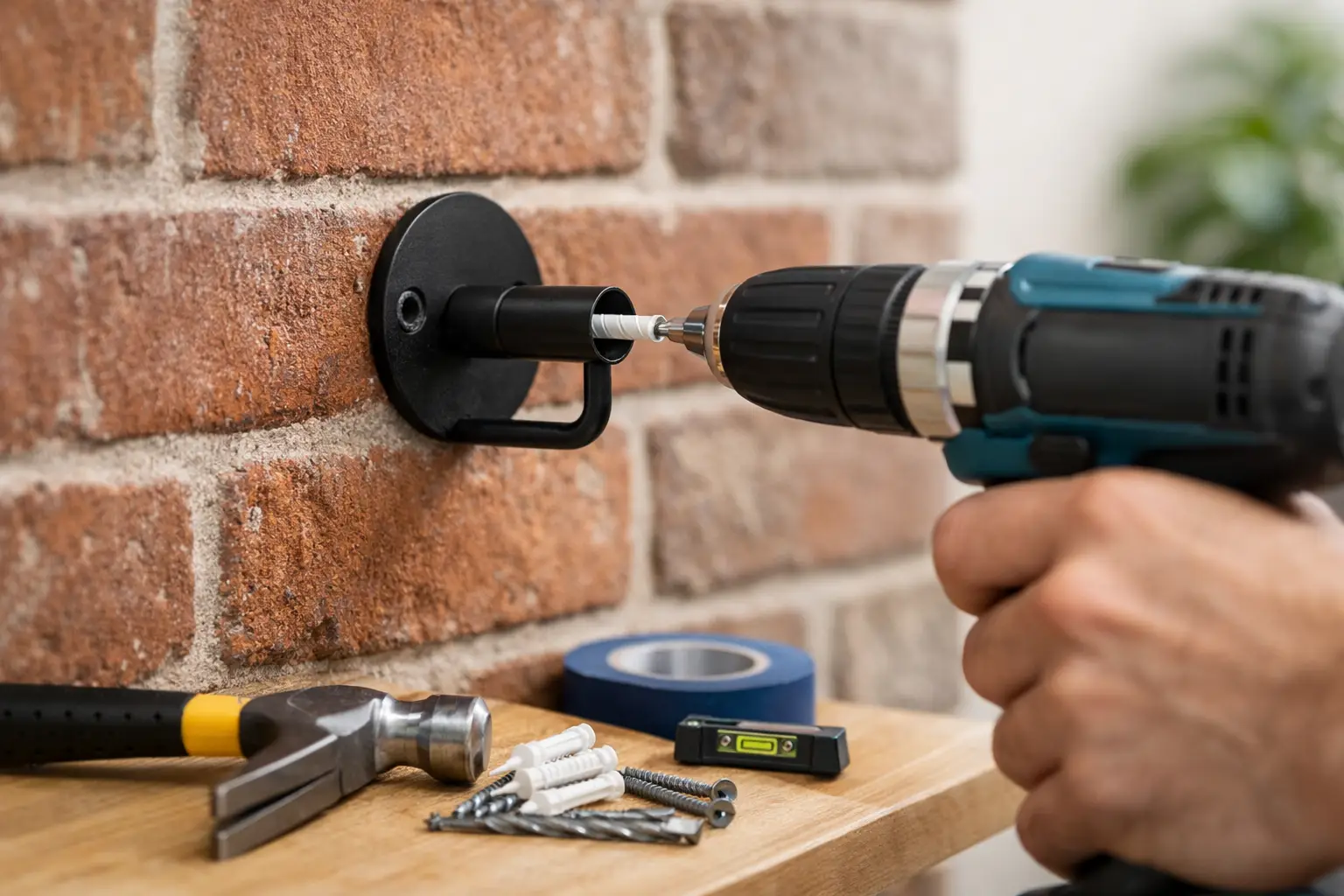
Brick gives a room character, but it does not forgive guesswork. A misplaced hole can be difficult to hide, and a poorly chosen anchor can leave a TV, shelf, or mirror unstable. This guide to mounting on brick helps you understand what a secure installation requires before you put a drill to the wall.
For many Austin and Central Texas homes, exposed brick may be original masonry, a brick fireplace surround, or a veneer feature wall. Those surfaces can look similar while behaving very differently once you begin drilling. The safest approach starts with identifying the wall, matching the hardware to the item’s weight, and knowing when a professional installation is worth the peace of mind.
Start by Identifying the Brick Wall
Not every brick surface is built to carry the same load. Solid brick walls are structural masonry, while brick veneer is a thinner exterior or interior layer installed over another wall system. A fireplace façade may also include brick with a cavity, metal components, or heat-related restrictions behind it.
Before mounting anything, look for clues around outlets, vents, wall edges, and unfinished areas. A solid masonry wall generally sounds and feels dense across the surface. Veneer may have a small cavity behind it, which affects anchor selection and how much weight the wall can safely support.
If you are mounting a television over a fireplace, there is another consideration: heat. Even when the brick itself is strong, repeated heat exposure can shorten the life of electronics and may affect where a mount can be placed. Check the fireplace manufacturer’s guidance and measure the temperature in the intended TV location after the fireplace has been running.
The Right Tools for Mounting on Brick
Brick requires more than a standard drill and a box of drywall anchors. The correct tools help create a clean hole and let the anchor grip the masonry instead of cracking it.
For most household mounting projects, you will need a hammer drill, a masonry bit sized for the anchor, a level, a tape measure, safety glasses, and a vacuum or brush to clear dust from drilled holes. A socket set or wrench may also be necessary for lag bolts and heavy-duty mounting hardware.
A regular drill can sometimes get through soft mortar or lightweight brick, but it often struggles, overheats bits, and creates less consistent holes. A hammer drill uses a forward tapping action that is designed for masonry. That extra capability matters most for dense brick and heavier installations.
Choose hardware based on the load, not on what happens to be in the toolbox. Light décor may work with masonry screws or smaller plastic anchors rated for brick. Shelves, large mirrors, and TV mounts commonly require masonry anchors, sleeve anchors, or concrete screws rated for the combined weight of the item and the mounting bracket.
Never use standard drywall anchors in brick. They are made to expand behind drywall, not grip a solid masonry surface. They can fail without much warning.
Where to Drill: Brick or Mortar?
This is one of the most common questions in any guide to mounting on brick. In many cases, drilling into the brick itself provides a stronger, more predictable hold than drilling into mortar. Brick is typically denser and less likely to crumble under a heavy load when the proper bit and anchor are used.
Mortar can be a reasonable choice for very light items, especially when preserving the face of historic brick is a priority. It is easier to patch later, but it is also usually weaker than brick and can deteriorate with age. Avoid relying on mortar joints for a heavy TV mount, floating shelf, or anything above a frequently used seating area.
Keep holes away from the edge of an individual brick. Drilling too close to an edge increases the risk of chipping or splitting. If the mounting plate allows it, adjust the placement slightly so each fastener lands in a solid, centered area of brick.
A Safer Process for TVs, Shelves, and Mirrors
The installation process changes with the item, but the fundamentals stay the same. Measure first, confirm the mounting height, and mark every hole before drilling. For a TV, this means checking that the bracket is level and that the screen will sit at a comfortable viewing height once attached.
Begin with a small pilot hole if the hardware instructions recommend one. Hold the drill perpendicular to the wall and use steady pressure rather than forcing the bit. Let the hammer drill do the work. Stop at the depth required by the anchor, which is often slightly deeper than the fastener itself to allow room for masonry dust.
Clear dust from every hole before installing anchors. Dust can prevent an anchor from seating correctly and reduce its holding strength. Insert the anchor as directed by its manufacturer, then tighten the screw or bolt until secure. Overtightening can damage threads, crush an anchor, or crack brittle masonry.
For a television, attach the wall plate first and test it carefully before hanging the screen. Confirm that every fastener is fully seated, the bracket is level, and the mount does not shift under firm hand pressure. Then attach the TV with the correct screws, spacers, and washers supplied for that model. The wall mount may be secure, but using the wrong TV-side screws can still create a serious risk.
With shelves and mirrors, pay close attention to the load after installation. A shelf that will hold books, dishes, or plants needs to be rated for that real-world weight, not just the empty shelf. A mirror should use hardware designed to keep it from lifting off the bracket if bumped.
Mistakes That Can Damage Brick or Create a Safety Risk
Rushing is the biggest problem. People often drill before checking for level placement, select anchors by appearance rather than load rating, or assume all brick walls are solid. Those shortcuts can mean extra holes, loose hardware, and an item that needs to come down later.
A few other mistakes deserve attention:
- Mounting heavy items with only two undersized fasteners when the bracket calls for four or more.
- Drilling into cracked, loose, or visibly deteriorating brick without repairing the masonry first.
- Ignoring electrical lines, plumbing, fireplace components, or cable routing behind the wall.
- Pulling a heavy TV mount far away from the wall on an articulating arm without accounting for the added leverage.
That last point matters more than many homeowners realize. A fixed TV mount keeps the load close to the wall. A full-motion mount creates leverage every time the TV is extended, so it needs hardware and installation points rated for that additional force.
When Professional Mounting Makes Sense
DIY can work well for a lightweight item when you have the right tools and feel confident about the wall construction. The trade-off is that masonry leaves little room for correction. If the mount is crooked, the anchor spins, or the brick chips, fixing the issue can become more involved than the original project.
Professional help is especially useful for large televisions, full-motion mounts, fireplace installations, tall shelving, or anything mounted over furniture where people sit or sleep. A trained technician can evaluate the surface, use appropriate masonry hardware, place the mount accurately, and handle cable management for a clean finished look.
Smart Solutions TX provides secure TV mounting and in-home setup help for homeowners and renters who want the job handled with care. Background-checked technicians, a 90-day service guarantee, and convenient online scheduling help take the uncertainty out of a project that should feel exciting, not stressful.
A brick wall can be a reliable mounting surface when it is treated with the right preparation and respect. Take the time to verify the wall, choose hardware that matches the load, and stop before drilling if anything feels uncertain. A secure installation protects your wall, your belongings, and everyone who enjoys the space.