

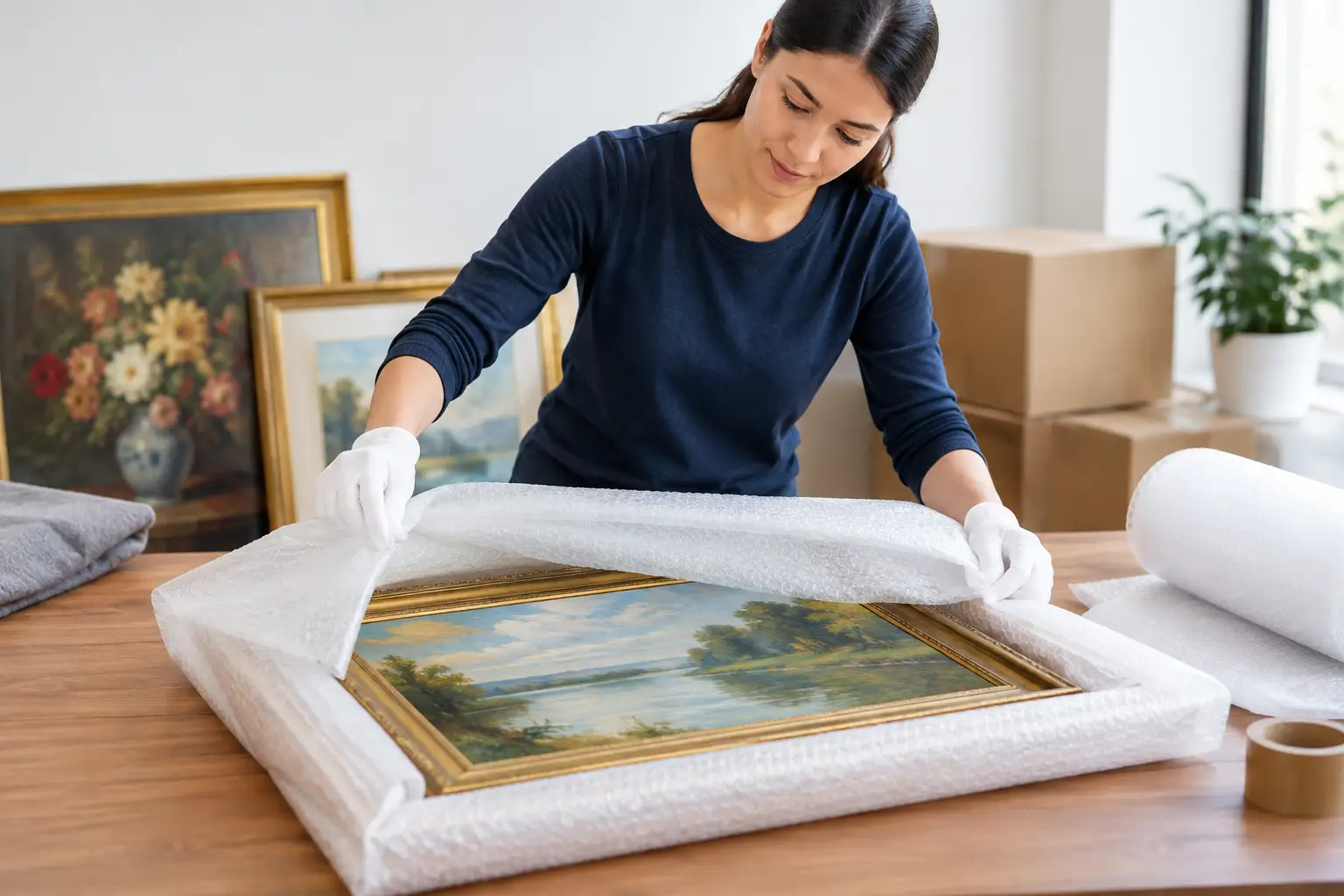
A framed print can make it through years on your wall and still crack during the 20-minute drive to a new home. The difference usually comes down to how it is wrapped, boxed, and loaded. Knowing how to pack fragile artwork protects more than the piece itself – it protects the time, money, and memories behind it.
Whether you are moving across Austin or preparing for a long-distance relocation, treat every framed piece, canvas, mirror, and original work as its own packing project. A rushed box, loose fill, or one heavy item placed on top can turn a manageable move into an expensive replacement.
How to Pack Fragile Artwork Before Moving Day
Start by deciding what needs special handling. Not every wall decoration needs the same level of protection. A lightweight framed poster can often travel safely in a properly packed picture box, while a large canvas, antique frame, original painting, or piece with glass deserves more layers and a more controlled loading plan.
Take a quick photo of each item before packing it. This gives you a record of its condition and helps you remember where each piece belongs when you unpack. For valuable artwork, photograph the front, back, corners, and any existing wear. If an item has insurance documentation, keep those records with you rather than placing them in a moving box.
Remove hanging hardware that sticks out, such as loose wires, hooks, or decorative wall mounts. If the hardware cannot be removed, pad it carefully so it cannot scratch another piece. Clean, dry hands are best when handling artwork, especially unframed paper pieces and canvases.
Gather the right packing materials
Packing artwork with leftover grocery bags or thin shipping boxes is a gamble. Use supplies that match the weight and fragility of the piece:
- Glassine paper or acid-free tissue for art surfaces and unframed pieces
- Painter’s tape, packing tape, and cardboard corner protectors
- Bubble wrap, moving blankets, and stretch wrap
- Sturdy picture boxes or adjustable mirror and artwork boxes
- Flat cardboard sheets and clean packing paper for added structure
Avoid letting bubble wrap touch the painted surface of a canvas or an original painting. Temperature changes and pressure can leave marks or cause the wrap pattern to transfer. Place a protective barrier, such as glassine or acid-free tissue, between the artwork and any cushioning material.
Protect Glass, Frames, and Corners First
Glass is often the most vulnerable part of framed artwork. If the glass breaks, it can damage the print, mat, and frame at the same time. For a framed piece with glass, make a large X across the glass using painter’s tape. This will not stop the glass from breaking, but it can help hold broken pieces together and reduce shifting if an impact occurs.
Do not use painter’s tape on the frame finish, paper artwork, or painted surfaces. It may lift color, leave residue, or damage delicate materials. The tape should only touch the glass.
Next, place cardboard corner protectors over all four corners. Corners absorb a surprising amount of impact when items are carried through doorways, set down, or shifted in a truck. If you do not have corner protectors, create reinforced corners by folding small pieces of cardboard around each edge and securing them with tape.
For ornate, antique, or very heavy frames, wrap the frame in a moving blanket before adding the final box. These frames can be more fragile than they look, particularly where decorative molding meets the corners.
Wrap Each Type of Artwork the Right Way
A one-size-fits-all approach is where many packing mistakes begin. The right wrapping method depends on whether the piece has glass, a canvas, or an exposed paper surface.
Framed art with glass
Lay the framed piece face up on a clean, flat surface. Cover the front with a sheet of cardboard cut slightly larger than the frame, then wrap the entire piece in bubble wrap. Secure the wrap with tape around itself, not directly to the frame.
Add a second cardboard sheet to the back if the artwork will be traveling a long distance or sharing a box with other framed pieces. The goal is to create a firm, protective sandwich that keeps pressure off the glass.
Stretched canvases and paintings
Canvas artwork should be protected from punctures, dents, and moisture. Place glassine paper or acid-free tissue over the painted side, then cover the front and back with rigid cardboard. Wrap the piece loosely but securely with bubble wrap, keeping the bubbles from direct contact with the paint.
Do not stack anything on top of a canvas. Even a light box can dent the surface or damage the stretcher bars. Large canvases are often safer when transported upright and secured against a flat, padded surface in the moving vehicle.
Unframed prints, photographs, and paper art
Use acid-free tissue or glassine paper between each piece. Sandwich smaller works between two rigid cardboard sheets, then tape the cardboard edges together to prevent bending. If the piece is valuable, signed, or irreplaceable, consider carrying it with you rather than loading it on the truck.
Choose a Box That Leaves No Room to Shift
Picture boxes are designed to hold artwork upright and reduce open space. For most framed pieces, choose a box just slightly larger than the artwork. If the box is much larger, the frame can slide around and absorb impacts from every turn or stop.
Line the bottom of the box with crumpled packing paper or a folded moving blanket. Place the artwork upright, never flat, and add cardboard dividers if you are packing multiple pieces together. Fill open spaces firmly with packing paper so nothing can shift, but do not force so much material into the box that it presses against the glass or canvas.
When packing multiple framed pieces in one box, place the heaviest and largest item toward the outside edge and separate every item with cardboard. Keep frames similar in size together when possible. Mixing a small frame with a much larger, heavier frame increases the chance of pressure damage.
Seal the box well along the bottom and top seams. Label it clearly on multiple sides with “FRAGILE,” “ARTWORK,” and “THIS SIDE UP.” Labels do not replace careful handling, but they give everyone moving the box a clear warning.
Load Artwork Safely in the Moving Vehicle
The best wrapping can still fail if artwork is loaded incorrectly. Keep boxes upright, with the marked side facing up, and place them along the wall of the truck rather than in the center where they can slide. Secure them between mattresses, moving blankets, or other soft, stable items.
Never place heavy boxes, furniture, or appliances against artwork boxes. Avoid loading framed art under items that may shift when the vehicle turns. Mirrors and large framed pieces should travel on edge, not flat, because flat placement can put uneven pressure on the glass.
Temperature and humidity matter, especially for original paintings, photographs, and older pieces. Do not leave valuable art in a hot vehicle overnight or expose it to rain during loading. For a move with several high-value or oversized pieces, professional packing and careful loading are worth considering. The cost is often far less than repairing a damaged frame or replacing an irreplaceable original.
Know When to Bring in Moving Help
Some artwork is difficult to pack because it is large, awkward, fragile, or all three. Oversized mirrors, gallery walls, heirloom paintings, and large canvases can require two people just to lift and maneuver safely. Trying to carry them alone creates risk for both the artwork and the people moving it.
A dependable moving team can provide the hands-on support that keeps the process organized, from wrapping and boxing to loading and unloading. Smart Solutions TX helps Central Texas homeowners and renters handle the details that make moving day less stressful, including careful packing and labor for heavy or delicate belongings.
When the truck arrives at your new home, unload artwork early and place it in a dry, low-traffic room. Let temperature-sensitive pieces adjust before hanging them, especially after a move in extreme heat or cold. A little extra care at the finish line helps your favorite pieces arrive ready for the next wall, not the repair shop.