

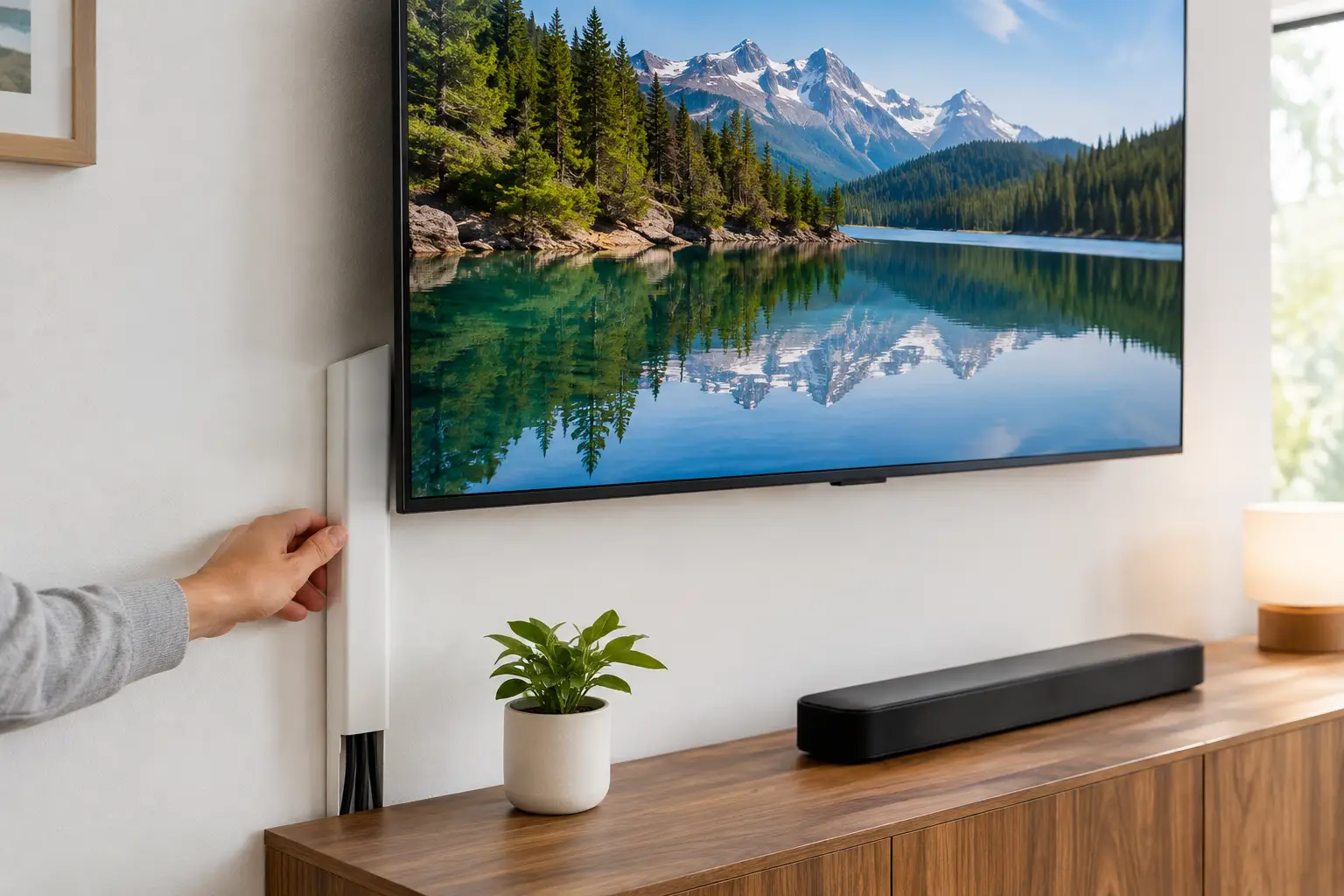
A newly mounted TV can make an Austin living room feel finished in an afternoon – until a bundle of black cords hangs beneath it. The best television cable covers turn that visual distraction into a clean, intentional setup while helping protect cords from daily bumps, curious kids, pets, and furniture movement.
Cable management is not just a cosmetic detail. The right cover can make a wall-mounted TV safer to live with, easier to clean around, and more polished for renters, homeowners, and families settling into a new space. The best choice depends on your wall, the number of cables you need to hide, and whether you want a quick surface-mounted solution or a more built-in look.
What Makes a Cable Cover the Right Choice?
A television cable cover, often called a cord raceway, is a channel that attaches to the wall and holds low-voltage cords such as HDMI, power, Ethernet, and soundbar cables. It creates a straight, enclosed route from the TV to an outlet, media console, or connected device.
For most homes, the right cable cover should be wide enough to avoid cramming cords together, easy to trim to the correct length, and available in a finish that blends with the wall. White is the most common option because it can be painted, but black and wood-tone styles can be a better match near dark accent walls, media consoles, or exposed brick.
The wall surface matters, too. Smooth painted drywall is usually the simplest application. Textured walls, tile, brick, and stone may require more planning, stronger mounting hardware, or a different approach altogether. A cover that adheres well on flat drywall may not stay secure on a heavily textured surface.
The Best Television Cable Covers by Setup
There is no single cover that works perfectly in every room. These are the most useful styles to consider before choosing one for your TV installation.
Paintable surface raceways for most wall-mounted TVs
Paintable PVC raceways are often the best all-around option. They are affordable, low-profile, and designed to sit directly on the wall. Most come in straight sections with a removable cover, so cords can be placed inside before the lid snaps closed.
This style works especially well when the TV is mounted above a console or low cabinet. A vertical raceway can carry cables down from the screen and disappear once painted to match the wall. For a cleaner result, choose a model with corner pieces and connector fittings rather than trying to bend or force straight channels around turns.
The trade-off is that a surface raceway is still visible up close, even after painting. It is a polished improvement over loose cords, not a fully hidden in-wall installation.
Wide cord channels for entertainment-heavy setups
A basic TV may need only a power cord and one HDMI cable. A larger entertainment setup can quickly add a streaming device, gaming console, soundbar, Ethernet cable, antenna connection, and smart-home accessories. In that case, a narrow raceway becomes frustrating fast.
Wide cable channels are the better choice when several cords need to run together. Look for a channel with enough interior depth to hold cables without pinching them. Cramming cords inside can make the cover difficult to close and may put stress on cable ends.
Measure your cables before purchasing. The goal is not to fill every inch of the channel. Leave enough room to add or replace a cable later without taking the entire system apart.
Flat adhesive covers for renters and temporary setups
Renters often want a neat wall-mounted TV setup without adding multiple screw holes. Flat adhesive cable covers are designed for that situation. They usually install with strong double-sided tape and have a lower profile than traditional raceways.
They can be a practical option for apartments, condos, or short-term living arrangements, particularly when only one or two cords need to be concealed. Still, adhesive products need a clean, dry wall to bond properly. Dust, fresh paint, humidity, and textured finishes can all reduce holding power.
Removal deserves consideration as well. Even removable adhesive can lift paint in some situations. If protecting the wall is a priority, test a small area first and follow the manufacturer’s removal instructions slowly rather than pulling the channel off in one motion.
Floor cord covers when cables cross an open path
Not every cable runs straight down a wall. Sometimes the outlet is across the room, behind a sofa, or near a doorway. A floor cord cover provides a protected path for cables that would otherwise create a tripping hazard.
These covers are typically made of flexible rubber or durable plastic and are designed to sit flat against the floor. Choose a color that blends with the flooring when possible, and use the shortest practical route. A floor cover should not become a raised obstacle in a high-traffic walkway.
For a permanent room layout, it is usually better to move equipment closer to an outlet or consider a professionally planned power solution. Extension cords and floor covers can be useful, but they should not become a long-term substitute for safe electrical access.
How to Choose the Best Television Cable Covers
Start by counting every cable that will be connected after the TV is mounted. Include cords that are easy to overlook, such as a soundbar connection, power cable, Ethernet line, or cable box lead. A cover that looks right before the equipment is connected may be too small once the full setup is in place.
Then consider the route. The cleanest path is usually straight down from the TV to the media console or outlet. If the route needs to turn, select a system with matching elbows and junction pieces. Mixing separate parts can leave awkward gaps that make the installation look unfinished.
Next, decide whether the cover should blend in or make a design statement. A paintable cover works well on a light wall. A black raceway can look purposeful against a dark feature wall or beside a black TV frame. In a family room with wood furniture, a wood-look cover may make more sense than a bright white strip.
Finally, think about access. If you regularly switch gaming consoles or add devices, choose a cover that opens easily. A fully enclosed channel with complicated clips may look tidy, but it can be inconvenient when you need to replace an HDMI cable later.
Safety Details That Should Not Be Overlooked
Cable covers are intended for low-voltage cables and cord organization. They do not solve every electrical issue. A TV power cord should not be run inside a wall unless it is part of a code-compliant in-wall power solution installed for that purpose. Standard extension cords should not be concealed inside walls, under rugs, or behind permanently installed materials.
Keep cables away from heat sources, avoid sharp bends, and do not overload the outlet behind the TV. If a cover will be placed near a fireplace, confirm that the area stays within the TV manufacturer’s recommended temperature range. A clean setup is not worth risking electronics or creating a fire concern.
For homes with children or pets, make sure the channel is firmly attached and that the cable route does not leave loose ends within reach. A mounted TV should also be secured to the appropriate wall structure with hardware rated for the television’s size and weight.
A Better Finish Starts With the TV Mount
Cable covers look their best when the television is mounted at the right height and the cords are planned before the final connection is made. This is where a little forethought saves time. Positioning the mount, outlet, media console, soundbar, and cable route as one system prevents the common last-minute problem of cords that are too short, too visible, or forced into an awkward path.
For busy homeowners and renters, professional installation can remove the guesswork. Smart Solutions TX can securely mount your TV and help create a clean, organized result, so the room feels ready to enjoy rather than like another unfinished move-in task.
The best cable cover is the one that fits your actual setup, stays secure on your wall, and leaves room for the devices you use every day. A few careful measurements before installation can turn a wall of visible cords into a space that feels calm, safe, and genuinely complete.