

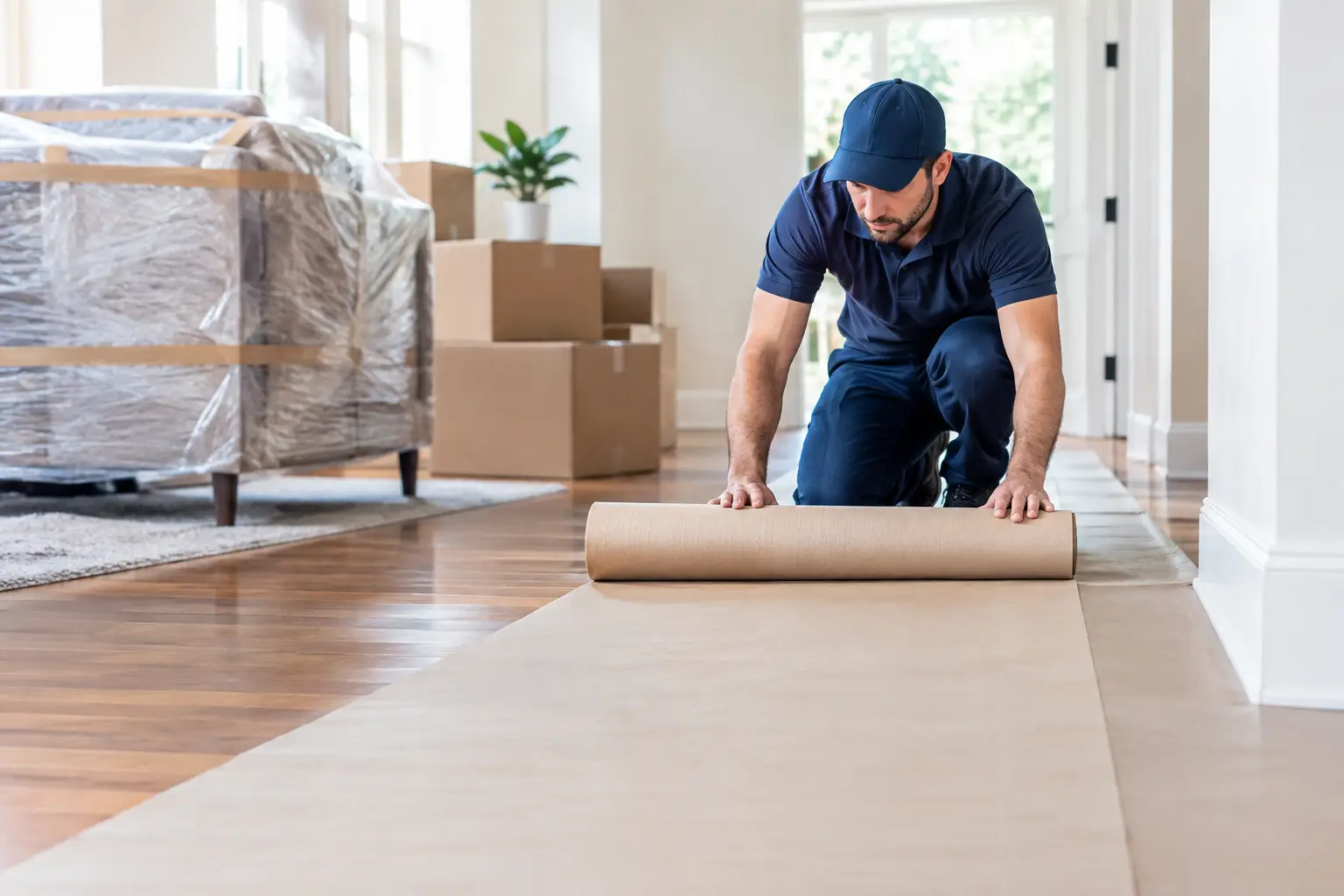
A moving box sliding just a few feet across hardwood can leave a scratch that outlasts the move itself. Muddy shoes, furniture legs, dropped tools, and overloaded dollies can also turn a busy move-in day into an expensive repair project. Knowing how to protect floors during moves keeps your home looking cared for, helps renters avoid deposit deductions, and gives everyone one less thing to worry about.
The best approach is not one oversized drop cloth tossed near the front door. Floor protection works when you plan the route, use the right materials for the flooring, and keep every person handling furniture on the same page.
Start With the Moving Path
Before the first box comes inside, walk the complete route from the truck or driveway to each room. Look for high-risk areas: entryways, narrow hallways, stairs, turns near door frames, and rooms where heavy furniture will be assembled or placed.
Clear the path of rugs, shoes, small décor, and loose cords. Rugs may seem like built-in protection, but they can bunch under a hand truck or create a tripping hazard when movers are carrying something heavy. It is safer to remove them and cover the flooring underneath with a material made for moving traffic.
Also check for grit. Sand, small rocks, and debris are especially damaging under moving blankets, cardboard, and shoe soles. A quick sweep or vacuum before coverings go down makes a meaningful difference, particularly in Austin homes where dust and gravel can get tracked in from a driveway or garage.
Choose Floor Protection for the Surface
Different floors need different protection. The goal is to shield the surface without creating a slippery or unstable walkway.
For most local moves, these materials cover the main risks:
- Ram board or heavy-duty floor paper is a strong option for hardwood, laminate, tile, and luxury vinyl plank. It creates a firm barrier for foot traffic and box movement.
- Plastic floor runners help guard carpet from dirt, moisture, and shoe traffic. Choose a runner designed to grip carpet so it does not shift underfoot.
- Moving blankets add cushioning under furniture during staging and can protect delicate areas, but they are not ideal as a full walking path because they can slide or bunch.
- Plywood or hardboard panels can distribute weight when a heavy safe, refrigerator, or large cabinet must cross a vulnerable surface. These require careful handling and are usually best placed by experienced movers.
Hardwood deserves extra attention. Even a clean box can drag grit across a wood finish, while a sofa leg can dent softer wood species. Use a rigid protective layer along the route and place felt pads or furniture sliders under legs before repositioning pieces.
Tile and stone are durable but not invincible. Their biggest risks are cracked grout, chipped edges, and impact from dropped furniture. Avoid dropping heavy items near transitions or thresholds, and do not assume a thin blanket is enough protection for an appliance dolly.
For carpet, dirt and moisture are usually the biggest concerns. Plastic runners work well for traffic, but avoid leaving adhesive-backed products down longer than necessary. Some adhesives can leave residue or pull at carpet fibers, especially in older rental units.
Cover the Route Before Loading or Unloading
Timing matters. Lay protection down before boxes begin moving, not after the first few trips have already tracked in dirt or scuffed the entryway.
Start at the exterior entrance and work inward. Overlap floor paper or runners slightly so there are no exposed gaps between sections. Secure edges with a tape approved for the surface, and keep tape off finished hardwood whenever possible. If you must tape near wood or vinyl, use low-tack painter’s tape and test a small hidden area first.
Do not create raised seams in a doorway or on stairs. A loose edge can catch a shoe, hand truck wheel, or furniture leg. That is a floor-damage problem and a safety problem at the same time.
If rain is expected, extend protection farther into the house than you think you need. Wet shoes and damp cardboard can transfer moisture quickly, especially onto wood, laminate, and carpet. Keep a stack of clean towels near the door so spills and wet footprints can be handled right away.
Protect Floors When Moving Heavy Furniture
Most serious damage happens with the large items: sectionals, bed frames, dressers, dining tables, washers, dryers, and refrigerators. These pieces should be lifted whenever possible, not dragged.
For furniture that is too heavy to lift continuously, use the right moving tools. Felt sliders are useful for smooth hard floors and can reduce friction when repositioning a couch or dresser. Plastic sliders may work better over carpet. The trade-off is that sliders can move unexpectedly if the floor is uneven, so one person should guide the item while another watches the path and protects walls, door frames, and flooring.
A dolly can make appliance and box moves faster, but its wheels should be clean before they cross indoor flooring. Check for trapped pebbles, hardened mud, or metal edges that could scratch tile or wood. Never roll a loaded dolly directly across an unprotected hardwood floor just because the trip is short.
Furniture pads should also be secured around sharp corners and feet. A padded sofa arm is less likely to damage a wall, while padded legs are less likely to leave a mark if the piece needs to be briefly set down. For fragile or expensive flooring, build in more hands rather than asking one person to wrestle an oversized item through a tight space.
Keep Boxes and Supplies Off Finished Floors
Floor damage is not limited to furniture. Cardboard boxes can soften when wet, break open, and leave grime behind. Open toolboxes can scratch flooring when pulled across a room, and loose hardware can dent or gouge a surface.
Create a designated staging zone near the entrance, garage, or a protected room. Place boxes there first, then carry them to their final rooms in smaller groups. This reduces clutter in hallways and prevents people from stepping around stacks with heavy items in their hands.
Use clean moving blankets or floor paper beneath assembly projects as well. Bed frames, desks, TV stands, and shelving units often arrive with metal brackets, screws, and tools that can easily mark a finished floor. A protected work area makes cleanup simpler and gives you a safer place to organize parts.
Do Not Forget Stairs, Thresholds, and Elevators
Transitions are easy to overlook because they are small, but they take repeated impact throughout a move. Cover stair treads when possible, keep railings clear, and make sure the crew knows which direction large furniture will turn before lifting it.
At exterior thresholds, use a runner or sturdy paper barrier that extends past the door. Thresholds can be scratched by dolly wheels, furniture feet, and boxes dropped while someone is trying to manage a door. In apartment buildings, ask property management about elevator protection requirements before move day. Some buildings require pads, mats, or reserved moving hours, and planning ahead can prevent delays.
Assign Someone to Watch the Details
Even with great materials in place, floor protection can fail when nobody is monitoring the route. During a DIY move, assign one person to watch for shifting runners, wet spots, torn paper, and debris. During a professional move, point out any newly refinished wood, delicate tile, or areas that concern you before work begins.
Take quick photos of floors before the move if you are leaving a rental or moving into a newly built home. This is not about expecting problems. It is a practical record that can be helpful if questions arise later about pre-existing marks or damage.
For a move that includes packing, loading, unloading, furniture assembly, or TV mounting after arrival, working with one accountable team can reduce the handoffs that often lead to rushed handling. Smart Solutions TX provides hands-on moving and home setup help across Austin and Central Texas, so you can book dependable support when careful execution matters.
A protected floor gives your move a calmer starting point. Set the route, cover it correctly, lift instead of drag, and pause whenever a heavy item does not have a clear path. Those few minutes of preparation can protect the home you are leaving and the one you are ready to enjoy.