

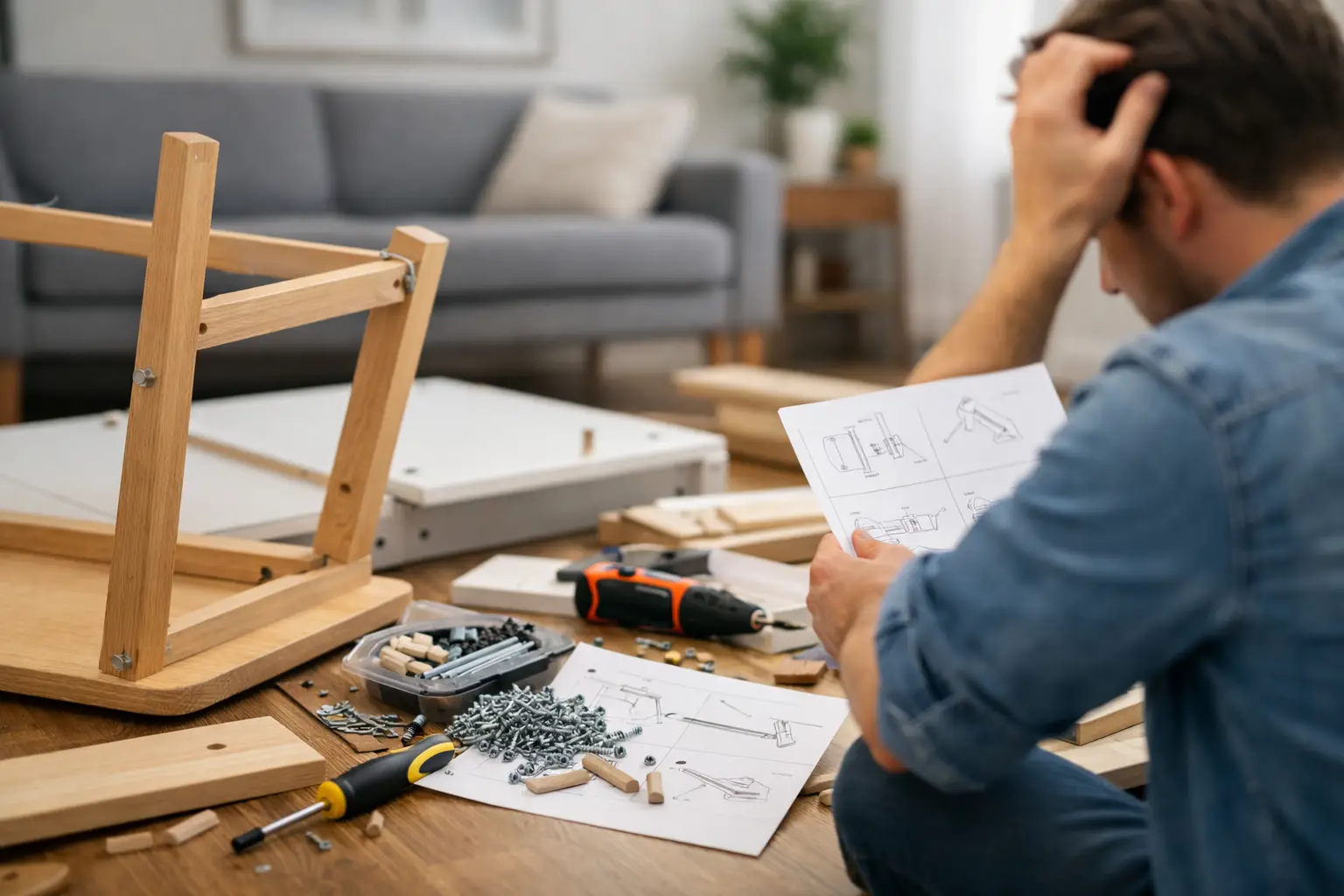
A new desk, bed frame, or storage unit should make your home feel more settled, not leave you with extra screws, a sore back, and a piece that wobbles every time someone walks by. The top furniture assembly mistakes usually happen before the first panel is connected: rushing, skipping the setup, or assuming every box contains exactly what it should.
For busy Austin-area renters, homeowners, and families, furniture assembly is often squeezed between work, a move, school pickup, and dozens of other tasks. A little preparation protects your purchase, your floors, and your time. Here is what commonly goes wrong and how to get a sturdy result.
1. Starting Before Checking the Parts
Opening the box and jumping into step one feels productive. It can also create a frustrating stop halfway through the project when a hardware bag is missing, a panel arrived damaged, or two nearly identical pieces were mixed up.
Before assembling anything, clear a workspace and compare every board, leg, fastener, bracket, and tool with the instruction manual. Lay similar pieces apart from each other and keep hardware in small containers or clearly separated groups. This matters especially for large bedroom sets, entertainment centers, and modular shelving, where left and right pieces can look almost identical.
If something is missing or damaged, pause before modifying a part or using a substitute screw. Improvising too early can void a return option or cause a connection to fail later.
2. Ignoring the Instructions Until Something Does Not Fit
Furniture instructions are not always easy to read, but the sequence is there for a reason. A common mistake is assembling a frame fully, then realizing a crossbar, drawer track, or backing panel needed to be installed first.
Read through the entire booklet before starting. Pay close attention to drawings that show orientation, especially the direction of predrilled holes, cam locks, drawer slides, and finished edges. If a step is unclear, compare the pictured part with the physical piece from several angles rather than forcing it into place.
There is a trade-off here. Some simple items can be assembled quickly with minimal review, but larger or weight-bearing furniture deserves a slower first pass. Five extra minutes with the instructions can prevent an hour of disassembly.
3. Mixing Up Hardware and Using the Wrong Fastener
Many furniture kits include screws that differ by only a few millimeters. Using a long screw where a short one belongs can punch through a visible surface. Using a short screw in a structural connection can leave the piece unstable.
Sort hardware by size and label it according to the instruction guide. Measure questionable screws against the illustration or lay them side by side. Do not assume two screws are interchangeable just because they use the same screwdriver bit.
Also watch for specialized hardware. Cam locks, dowels, barrel nuts, brackets, and connector bolts each have a specific job. A cam lock only holds correctly when its opening faces the connecting bolt. If it turns freely or will not tighten, stop and check its direction instead of applying more force.
4. Tightening Every Screw Too Soon
One of the top furniture assembly mistakes is fully tightening each connection as soon as it is installed. That approach can pull a frame out of square, make the final holes impossible to align, or leave drawers that bind.
Start screws, bolts, and cams loosely until the related panels and supports are in place. Once the frame is aligned and all connection points are engaged, tighten the hardware gradually and evenly. Think of it like adjusting a picture frame: small corrections are easier before everything is locked down.
This does not mean leaving furniture loose. After final tightening, test each major joint. A bed frame should not shift at the rails, a desk should sit level, and a cabinet door should open without rubbing. Recheck fasteners after a few days of normal use, particularly on furniture that carries weight.
5. Assembling on Carpet, Tile, or an Unprotected Floor
The floor is often an overlooked part of the job. Building a heavy cabinet directly on hardwood can cause scratches when it is turned upright. Working on thick carpet can hide small hardware, throw a frame off level, and make it harder to tell whether a piece is truly stable.
Choose a clean, flat area with enough room to lay out panels in the order you need them. Use a moving blanket, cardboard, or soft protective layer under finished surfaces. Keep the workspace free of toys, pets, and foot traffic while parts are spread out.
For tall or heavy furniture, plan the lift before assembly begins. Measure the route from the workspace to the final room, including doorways, stair turns, and ceiling height. A fully assembled unit may not fit through a narrow apartment hallway, and dragging it into place can damage both the furniture and the home.
6. Using the Wrong Tools or Too Much Power
The small wrench or hex key included in the box may be enough for a lightweight side table. It can be slow and uncomfortable for a large bed, wardrobe, or desk. On the other hand, using a high-powered drill without care can strip threads, crack particleboard, or overdrive a screw.
Use the tool specified by the manufacturer whenever possible. If you use a drill or electric driver, choose a low torque setting and finish delicate fasteners by hand. Never force a screw that is resisting. Back it out, make sure it is entering straight, and confirm that the hole is intended for that fastener.
A basic level, measuring tape, rubber mallet, and Phillips screwdriver are useful for many projects. The right tools make assembly easier, but patience is what protects the materials.
7. Skipping Alignment Checks for Drawers, Doors, and Frames
Furniture can look finished while still being assembled incorrectly. A dresser may have drawers that catch, a cabinet door may hang crooked, or a desk may rock because one leg is not sitting flush.
Check alignment as you go, not only at the end. Before installing a back panel, confirm the cabinet body is square. Before tightening drawer slides, make sure both sides are mounted at the same height. After setting a piece upright, place a level across the top and test it on the actual floor where it will live.
Some minor adjustment is normal, particularly in older homes where floors are not perfectly level. Adjustable feet can help with small variations. However, do not use a shim to hide a loose frame or a missing support. The structure itself must be secure first.
8. Forgetting to Anchor Tall Furniture
A tall bookshelf, dresser, wardrobe, or storage cabinet can be hazardous if it tips forward. This is especially important in homes with young children, pets, or anyone who may pull on drawers or climb shelves.
If the manufacturer includes an anti-tip kit, install it. Locate a wall stud when required and use the appropriate hardware for the wall type. Drywall anchors have limits, and a standard anchor may not be suitable for the load or the pull force created by a tipping piece.
Do not treat anchoring as an optional finishing touch. A properly assembled piece can still be unsafe if it is top-heavy or loaded incorrectly. Place heavier items in lower drawers and shelves, follow the weight limits, and secure tall units before putting them into daily use.
9. Trying to Handle a Two-Person Job Alone
Many furniture failures happen during the lift, not the assembly. Large panels can bend, glass can crack, and finished surfaces can chip when one person tries to hold, align, and fasten everything at once.
The box may say two-person assembly for good reason. Get help when a piece is oversized, awkward, heavy, or requires one person to stabilize it while another installs hardware. If help is not available, it is safer to schedule professional assembly than risk an injury or damage a new purchase.
Smart Solutions TX provides careful, in-home furniture assembly for the pieces that are not worth turning into an all-day project. Background-checked technicians can handle the details, so you can focus on getting your new space organized and ready to enjoy.
When Professional Assembly Makes Sense
DIY assembly works well when the item is simple, the instructions are clear, and you have the time, workspace, and tools. Professional help becomes especially valuable for large bedroom sets, multi-drawer dressers, wall units, office furniture, bunk beds, and pieces that need to be moved or anchored after assembly.
The right choice depends on the furniture, your schedule, and your comfort level. If a project starts to feel uncertain, stopping is not a failure. Protecting your home and your investment is the practical move.
A well-built piece should feel solid, sit level, and serve your household without becoming another item on the to-do list. Give the job the time and care it needs, or let a reliable helping hand take it from box to finished room.