

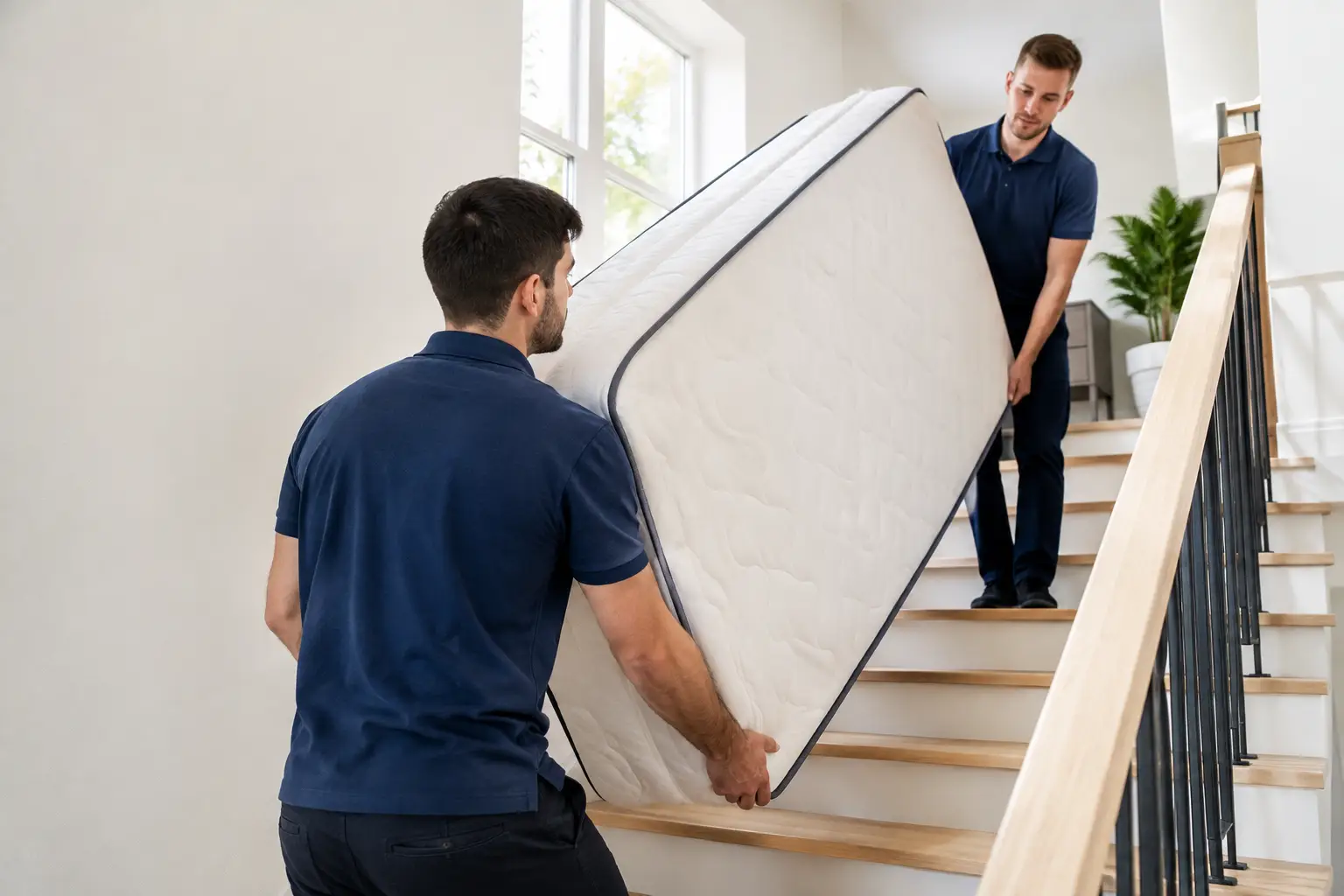
A mattress can turn a simple move into the moment everyone gets frustrated. It is bulky, flexible, awkward around corners, and surprisingly easy to stain or tear. The best mattress moving techniques keep the mattress clean, protect your walls and floors, and help everyone avoid a painful lift that could have been prevented with a few minutes of planning.
For Austin and Central Texas renters, homeowners, and busy families, the goal is not to prove you can handle a mattress alone. The goal is to get it from one room to the next home in good condition, without putting your back, your belongings, or your security deposit at risk.
Best Mattress Moving Techniques Start Before You Lift
A safe mattress move begins with preparation, not muscle. Strip the bed completely and place sheets, pillows, and blankets in a labeled bag or box before moving anything else. Loose bedding creates tripping hazards and can get dragged across floors or driveways.
Next, inspect the route from the bedroom to the moving truck. Measure the mattress, then check doorways, stairwells, elevators, hallways, and tight turns. A king mattress is 76 inches wide, while a queen is 60 inches wide. Even when a mattress fits through a doorway, the box spring, bed frame, or a sharp turn in a hallway may create the real challenge.
Clear shoes, décor, moving boxes, and small furniture from the route. Open doors fully and secure them if they tend to swing shut. If you are moving from an apartment, reserve the elevator when required and confirm where the moving truck can park. Those details prevent the mattress from sitting uncovered outside while you sort out logistics.
Use a Mattress Bag, Not Just a Blanket
A zippered mattress bag or heavy-duty plastic cover is one of the most useful moving supplies you can buy. It protects against dirt, moisture, dust, scuffs, and the mystery stains that can be waiting in a truck bed or storage area. Choose a bag sized for your mattress, slide it on before the move begins, and seal any open edges with packing tape.
Moving blankets add another layer of protection, especially for a mattress with delicate fabric handles or piping. They are helpful during a long-distance move or when the mattress will share space with wood furniture, metal bed frames, or tools. Do not rely on a blanket alone outdoors, though. It can slip, pick up moisture, and leave the mattress exposed.
If the mattress is wet, do not wrap it in plastic until it is fully dry. Trapping moisture can lead to odors or mildew. Let it air out first, then cover it for transport.
Lift With Two People Whenever Possible
Mattresses are not always heavy, but their size shifts the weight away from your body and makes them hard to control. Two adults should handle most queen, king, California king, hybrid, and adjustable mattresses. For heavy foam models, extra help may be worth it because the material can bend and sag as you carry it.
Stand on opposite ends of the mattress and agree on the route before lifting. Bend at your knees, keep your back as straight as possible, and lift with your legs. Hold the mattress close enough to control it, but do not twist your torso while carrying it. If you need to turn, stop, set the mattress down safely, and reposition your feet.
Communication matters more than speed. Use clear cues such as “lifting,” “down,” “turning,” and “stop.” The person walking backward should be especially vocal about thresholds, stairs, pets, or obstacles. A rushed move is where fingers get pinched in door frames and corners scrape freshly painted walls.
Avoid Carrying It Flat Through Narrow Spaces
For doorways, halls, and stairs, moving a mattress on its side is usually easier than carrying it flat. This gives you a narrower profile and makes it easier to pivot around corners. Hold the mattress vertically or at a slight angle, depending on the available ceiling height and room to turn.
That said, support matters. A soft memory foam mattress can fold sharply if held upright for too long. Keep a helper at each end, avoid pulling it by fabric handles, and do not force it through a tight opening. Those handles are typically meant for positioning on the bed frame, not for bearing the full weight of the mattress.
Protect Stairs, Walls, and Door Frames
Stairs require a slower pace and a clear plan. The person on the lower side of the mattress generally carries more of the load, so switch positions if the move involves multiple flights. Keep the mattress tilted enough to clear the steps while maintaining a stable grip.
For a narrow stairwell, cover sharp corners with moving blankets or cardboard. This simple step protects both the wall and the mattress bag. Watch for low light fixtures, handrails, and uneven outdoor steps, particularly during an evening move or when Central Texas weather has made surfaces slick.
Do not try to drag a mattress up stairs or across concrete. Dragging can tear the cover, grind debris into the fabric, and make a manageable item much harder to control. If you need a short rest, place it on a clean blanket or moving pad rather than directly on the ground.
Load the Mattress Correctly in the Truck
Once at the truck, place the mattress against a clean, dry wall of the cargo area whenever possible. In most cases, transporting it upright saves valuable floor space and reduces the risk of piling heavy boxes on top of it. Secure it with moving straps so it cannot shift during turns or sudden stops.
Keep mattresses away from items with sharp edges, such as bed rails, mirrors, tools, and unwrapped furniture legs. Put a moving blanket between the mattress and nearby items for extra protection. Never stack heavy furniture, boxes, or appliances on a mattress. The pressure can permanently damage the internal support layers, especially in foam and hybrid models.
A traditional innerspring mattress may tolerate being on its side for a local move, but it should not be bent aggressively. Memory foam, latex, and hybrid mattresses need more attention because folding them can damage foam layers, coils, or edge support. Check the manufacturer’s care instructions if you have them. Some mattress warranties specifically limit how the mattress should be moved or stored.
If the move includes a box spring, wrap and secure it separately. A box spring is lighter but easier to dent, puncture, or snag on a doorway. Do not use it as a platform for boxes just because it looks flat and convenient.
Know When DIY Is Not the Best Option
Sometimes the smartest technique is deciding not to wrestle with the mattress yourself. This is especially true if you are moving a king mattress down stairs, working around a tight apartment hallway, recovering from an injury, moving alone, or coordinating a packed move-out day with children or pets underfoot.
Professional moving help gives you the extra hands, equipment, and careful handling needed for large items. Smart Solutions TX provides hands-on loading and unloading support for Austin and Central Texas moves, helping take the strain out of the jobs that are hardest to manage alone. Background-checked technicians and a 90-day service guarantee offer added peace of mind when you want your home and belongings treated with care.
A mattress should arrive ready for a good night’s sleep, not with a torn cover, bent edges, or a new stain from the driveway. Give yourself enough time, protect the mattress before it leaves the bedroom, and ask for help when the route or the load calls for it.