

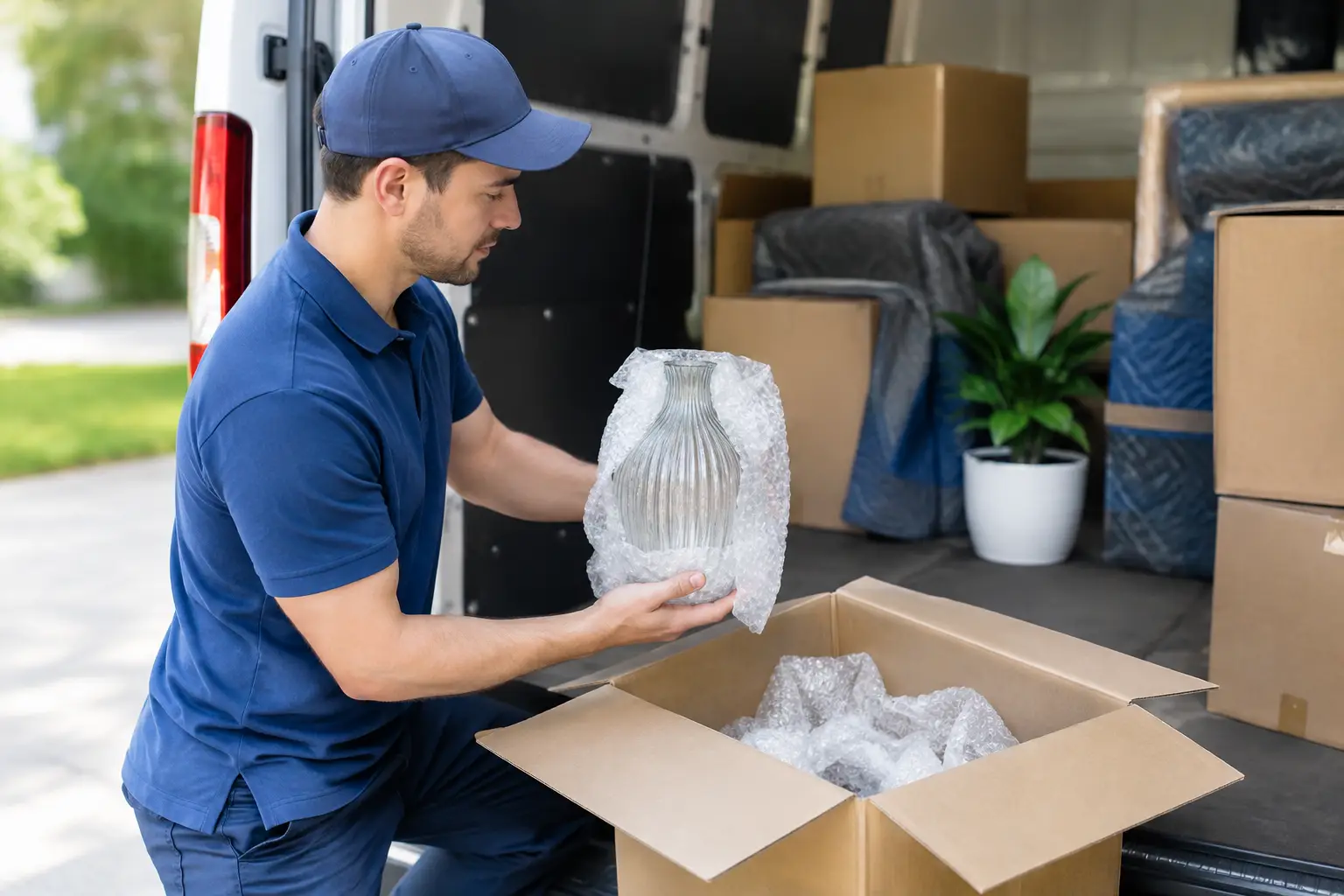
The last items loaded into a moving truck can determine how the first day in your new home feels. A cracked television, chipped mirror, or box of broken dishes creates an expensive problem before you have even unpacked. This fragile item loading guide explains how to protect the belongings that need the most care, from packing and labeling through placement in the truck.
For busy Austin-area households, the goal is not just getting everything from one address to another. It is getting there with the items you love intact, organized, and ready to settle into your new space.
Start With Protection Before the Truck Arrives
Safe loading begins with proper packing. Loading a fragile item that is loosely packed, poorly cushioned, or placed in an oversized box only transfers the risk from your living room to the moving truck. Before anything goes outside, check that each piece can handle normal movement, gentle vibration, and a few changes in direction.
Dishes, glasses, and small decor should be individually wrapped and packed tightly enough that nothing shifts when you gently move the box. Fill empty spaces with packing paper, towels, or other soft material. Bubble wrap is useful for especially delicate pieces, but it works best when paired with a box that fits the item well.
For framed artwork, mirrors, and flat-screen TVs, use moving blankets, padded covers, or purpose-built cartons whenever possible. Protect corners first. Corners take the most impact when an item is carried through doorways, set down, or positioned against a truck wall.
Electronics deserve their own approach. If you still have the original box and foam inserts for a television, monitor, or computer, use them. If not, wrap the item securely, keep cables together in a labeled bag, and avoid placing heavy objects on top. A TV may look sturdy, but pressure on the screen can cause damage that is not visible until it is powered on.
Label for How the Box Must Be Handled
A box marked “fragile” is helpful, but it does not tell a loader enough on its own. Clear labels make good decisions easier when several people are moving at once.
Write the contents and handling direction on at least two sides of the box. Phrases such as “glassware – keep upright,” “lamp base – do not stack,” or “TV – load upright” give more useful direction than a single warning. Marking the top with arrows also helps prevent a box of stemware from being placed on its side.
Do not rely on a fragile label as a substitute for a strong box. The box should be sealed with quality tape along the center seam and across the bottom. For heavy cartons containing dishes, use the H-tape method: tape the center seam, then tape across both side edges to reinforce the closure.
A simple inventory can reduce stress later. Number your most delicate boxes and keep a note on your phone of what is inside. This makes it easier to confirm that high-value belongings made it into the new home and helps you decide which boxes should be unloaded first.
Build a Stable Base Inside the Truck
The order of loading matters. Fragile belongings are safest when the truck is packed with a stable base of heavy, square, and well-balanced items. Furniture, appliances, and sturdy moving boxes typically go in first, secured close to the front wall of the truck.
Weight should be distributed evenly from side to side. An uneven load can shift during turns, and that movement can put pressure on items that were carefully wrapped. Heavy pieces need to be secured with moving straps or tie-downs so they cannot slide forward, backward, or sideways.
Once the base is in place, use mattresses, sofa cushions, and moving blankets as protective barriers. These soft layers are particularly useful between wood furniture and mirrors, artwork, or other items that could be scratched or crushed. Blankets should be wrapped and secured, not simply draped over a load where they can slip away during transport.
It depends on the truck size and the amount you are moving, but the general rule stays the same: build stable sections rather than trying to fill every open inch. A tightly packed truck is good. A truck with pressure points against fragile items is not.
Load Large Fragile Items Upright
Mirrors, framed art, glass tabletops, and televisions should generally travel upright, never flat. Their frames and edges are better able to handle the normal forces of the road when standing vertically and supported on both sides.
Place these items against a padded wall or in a protected gap between stable furniture pieces. Keep them away from sharp metal edges, exposed hardware, and unprotected corners. Use cardboard corner protectors or extra padding where surfaces may touch.
A glass tabletop requires special attention. Remove it from the base whenever possible, wrap it fully, and carry it on edge with two people. In the truck, secure it upright between padded items. Laying a large sheet of glass flat can concentrate stress across the surface, especially if another item shifts or is placed on top.
Televisions should be loaded screen-side inward, with the screen protected by a padded cover or moving blanket. Never place a TV in an area where boxes, tools, or furniture legs can press against the panel. If you are unsure whether a television will fit safely in the truck, it is better to transport it separately or have trained movers handle the loading plan.
Keep Small Fragile Boxes Above the Heavy Load
After large pieces are secured, load cartons with dishes, collectibles, lamps, and smaller electronics on top of sturdy, flat boxes. The boxes beneath them should be strong enough to support their weight without collapsing.
Avoid stacking fragile boxes too high. A tall stack may save space, but it can become unstable when the truck turns or stops. Keep the top layer below the height of nearby furniture when possible, so the boxes have natural support and are less likely to shift.
Do not place fragile boxes directly on the truck floor if they can be crushed by heavier items rolling or sliding near them. A raised, protected section is usually safer. If there is open space around a fragile carton, fill it with soft items such as pillows, comforters, or securely packed linens. Loose space is where movement begins.
Lamps should be broken down before loading. Remove lampshades and pack them separately in a box with light cushioning. Wrap the base, keep bulbs out of the fixture, and avoid forcing the lamp into a tight space where the neck or harp can bend.
Secure Every Section Before You Close the Door
Even a carefully arranged load can fail if it is not secured. Use ratchet straps or moving straps to hold major sections in place. The straps should be snug enough to prevent shifting without putting excessive pressure on furniture, artwork, or boxes.
Before closing the truck, perform a quick movement check. Gently press on each major section. If a piece wobbles, slides, or leans, adjust it now. The few minutes spent reinforcing a load can prevent hours of cleanup and replacement costs later.
Pay attention to the final items near the door. These pieces are more exposed when the truck is opened and may shift toward the opening during the drive. Secure them with a strap, and keep fragile cartons away from the rear edge whenever possible.
Weather can add another layer of risk in Central Texas. During rain, move delicate boxes directly from the home to the covered truck area as quickly as you can. Paper boxes and moisture do not mix well, particularly when they contain electronics, books, artwork, or kitchenware. In high heat, avoid leaving electronics and candles in a parked truck longer than necessary.
Know When Professional Loading Is Worth It
Some moves are manageable with friends and a rental truck. Others involve tight staircases, heavy furniture, oversized TVs, glass tables, or a packed schedule that leaves little room for trial and error. In those situations, professional loading help can protect both your belongings and your time.
Experienced crews know how to create balanced truck sections, use straps correctly, protect furniture finishes, and handle bulky pieces without turning a move into a series of risky lifts. For households that need packing, loading, unloading, furniture assembly, or TV mounting after the move, Smart Solutions TX can provide dependable hands-on support from one stage of the transition to the next.
A careful move is built one decision at a time: the right box, enough padding, a stable base, and secure placement. Give your most fragile belongings the space and attention they need, and you can open the truck door at your new home with far more confidence.