

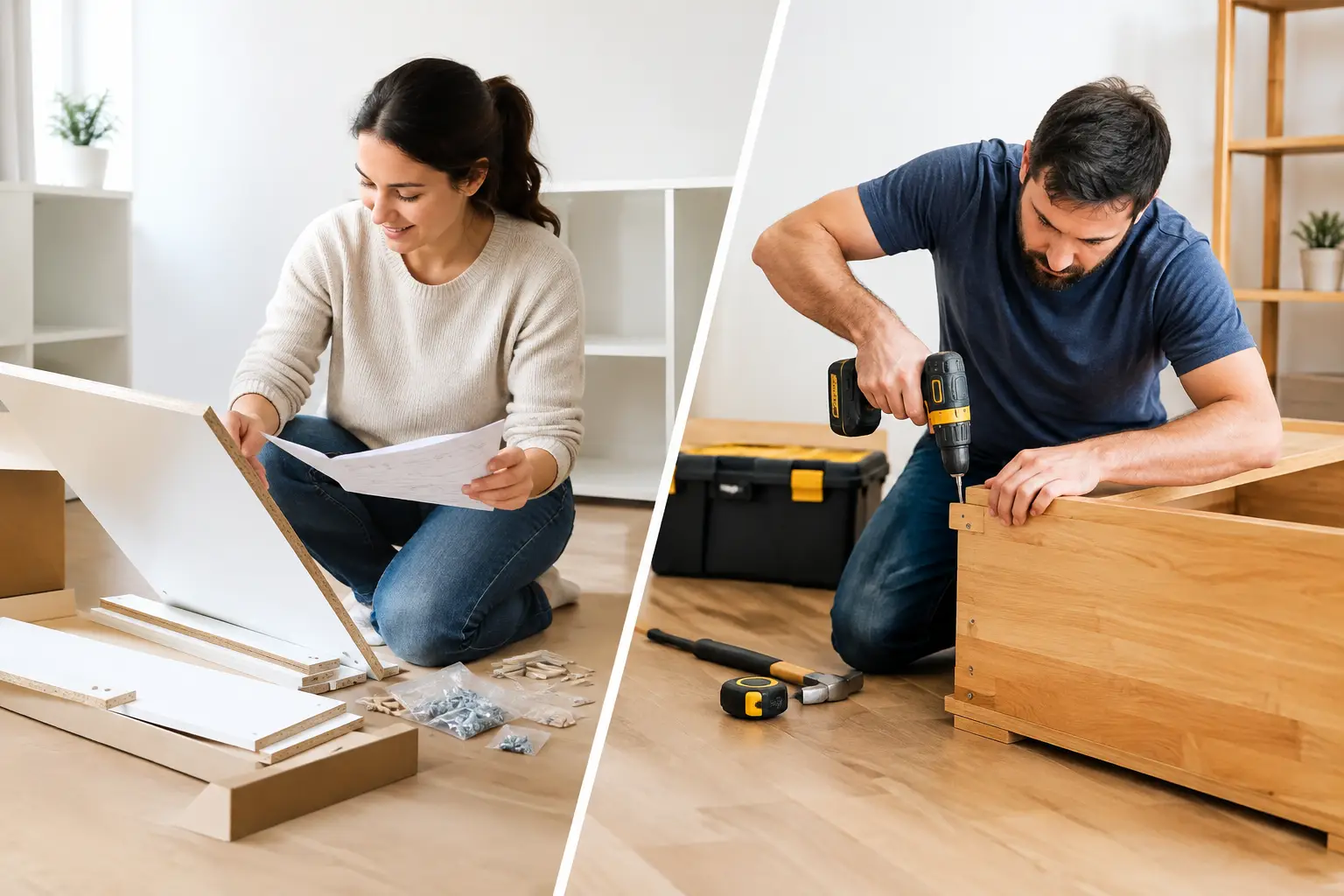
A new bed frame leaning against the wall, a box of hardware spread across the floor, and instructions that seem to skip a step can turn an exciting move-in day into a late-night project. When weighing flat pack assembly versus DIY, the real question is not whether you can assemble the furniture yourself. It is whether doing it yourself is the best use of your time, energy, and space.
For some straightforward pieces, DIY assembly makes perfect sense. For larger, more complex, or time-sensitive furniture, professional help can protect your purchase and help your home feel settled much sooner. Here is how to make the call with confidence.
Flat Pack Assembly Versus DIY: Start With the Real Cost
The price printed on a furniture box is only one part of the investment. Flat pack furniture is popular because it is practical, accessible, and easy to transport, especially for apartment moves and first homes. But its lower upfront cost can come with a hidden requirement: several hours of focused labor.
DIY can be a good value when you have the right tools, enough uninterrupted time, and a clear workspace. A simple nightstand or small side table may take less time to build than it takes to schedule help. If you enjoy hands-on projects, following directions, and checking off each step, assembling a few pieces can be satisfying.
The calculation changes when the project involves a large wardrobe, bunk bed, wall unit, dining set, or a full room of furniture. A project that appears to take two hours can stretch across an entire evening once you account for opening boxes, identifying parts, finding a missing tool, correcting a backward panel, and cleaning up packaging. If you are moving, working, caring for children, or preparing for guests, those hours carry real value.
Professional assembly is not just about putting pieces together. It is about getting the furniture built correctly, positioned where you want it, and ready to use without turning your living room into a staging area for days.
When DIY Furniture Assembly Is a Smart Choice
DIY is often the right fit for small, low-risk pieces with uncomplicated instructions. Think basic shelves, compact tables, simple storage cubes, or items that do not carry much weight and can be easily adjusted if a mistake occurs.
It also works well when you have assembled similar furniture before. Experience helps you recognize common hardware, understand diagram-based instructions, and avoid overtightening screws or forcing pieces into place. A second pair of hands is still useful for many items, but familiarity can make the process much less stressful.
Choose DIY when you can give the project your full attention. Rushing is where many problems begin. Skipped steps, mixed-up fasteners, and uneven alignment may not be obvious until the furniture starts wobbling or a drawer refuses to close. Set aside adequate time, clear the floor, keep hardware organized, and save the instructions and extra parts until the piece is completely finished.
There is nothing wrong with building furniture yourself. The key is choosing projects that match your available time and comfort level, rather than treating every flat pack box as a quick task.
When Professional Flat Pack Assembly Makes More Sense
Professional assembly is especially helpful when the furniture is large, heavy, expensive, or essential to daily life. A bed that needs to be ready tonight, a desk needed for tomorrow’s workday, or a dresser that must safely hold a child’s clothing is not an ideal place to learn through trial and error.
Complex pieces often involve more than attaching a few panels. They may require careful alignment, multiple hardware types, drawer adjustments, door leveling, anchoring, or lifting components that are awkward for one person. Even if the instructions look manageable, handling a large panel alone can lead to scratched floors, damaged furniture, or an avoidable injury.
Professional help can also be the better choice when furniture is being assembled in a tight apartment, upstairs bedroom, or newly furnished home. An experienced technician can work methodically in limited space and identify issues before they become bigger problems. That matters when you are trying to protect new flooring, avoid scuffed walls, and keep an already busy move from becoming more complicated.
At Smart Solutions TX, background-checked technicians provide careful furniture assembly for Central Texas households, backed by a 90-day service guarantee. For busy homeowners, renters, and new residents, having a reliable team handle the setup creates the predictable outcome DIY does not always offer: furniture that is assembled properly and ready for everyday use.
The Risks Are Not Always Obvious
Most assembly problems do not happen because someone ignored the instructions. They happen because the instructions assume the builder has enough space, the proper tools, a stable work surface, and the ability to spot small alignment issues early.
A cam lock turned the wrong direction may leave a connection loose. A screw driven too far can damage particleboard. A drawer rail installed slightly out of line can make the entire piece feel defective. With weight-bearing furniture, a missed brace or improperly secured support can affect stability long after the boxes are gone.
There is also the question of wall anchoring. Tall dressers, bookcases, and storage units may need to be secured to help prevent tipping, particularly in homes with young children or pets. That job requires an understanding of wall construction and suitable mounting points. Guessing can damage drywall or create a false sense of security.
DIY mistakes are often fixable, but fixing them can require more time than getting the assembly right from the start. If a panel is cracked, hardware is stripped, or a piece has been assembled out of order, disassembly can be difficult. Before you begin, consider how much risk you are comfortable accepting for that particular item.
How to Decide Before You Open the Box
A few practical questions can make the choice clearer. First, consider the size and purpose of the item. A lightweight accent table is different from a king bed frame or a six-drawer dresser. Next, look honestly at your schedule. If the furniture needs to be complete before a move, a work deadline, or a family visit, reliable scheduling may matter more than saving a few dollars upfront.
Then think about the tools and help available to you. Furniture brands often include a basic Allen key, but that does not mean it is the most efficient tool for the job. Some projects benefit from levels, drills, stud finders, socket sets, and protective materials for floors and walls. You may also need another person to hold, lift, and align components safely.
Finally, consider your tolerance for unfinished projects. Some people do not mind a half-built cabinet in the corner for a weekend. Others need their space functional immediately. Neither approach is wrong, but being realistic helps you choose the option that reduces stress instead of creating more of it.
A Better Move-In Plan for Austin Homes
Furniture assembly is often only one item on a long move-in list. Boxes need to be unloaded, rooms need to be arranged, and televisions may need secure mounting once the furniture is in place. Trying to manage all of it after a long move can leave you exhausted before your home begins to feel like home.
A practical approach is to reserve your DIY energy for the tasks you genuinely enjoy and hand off the jobs where precision, lifting, or timing matter most. You might assemble a small entryway table yourself while arranging professional help for the bedroom set, office furniture, or storage system. That balance gives you control without putting the entire setup burden on your shoulders.
If you choose professional assembly, prepare the space before the appointment. Make sure the boxes are in the correct room, clear a path from the entryway, and decide where each piece will sit. If wall anchoring is needed, mention it when scheduling so the project can be planned appropriately. These small steps help the work move efficiently and keep your home organized.
The best choice is the one that leaves you with safe, usable furniture and more time to enjoy your home. Whether you build it yourself or bring in trusted help, you deserve a setup process that feels manageable from the first box to the finished room.